

Small Daily Rituals That Create Big Life Changes
An article by Lionsgate Wellness
Small daily rituals are simple, intentional practices repeated consistently, such as mindful breathing, walking, gratitude, meditation or quiet reflection. Rather than relying on dramatic lifestyle changes, these small actions can gradually support healthier routines,
greater self-awareness and a stronger sense of wellbeing
by making positive choices part of everyday life.
A new year. A new routine. A retreat. A dramatic decision.
A promise that from Monday, everything will be different.
We often imagine that changing our lives requires doing something big.
Sometimes those moments really do become turning points.
But much of the transformation we experience in life happens much more quietly.
It happens in what we repeatedly choose.
The few minutes of silence before reaching for the phone.
The walk outside when your mind feels crowded.
The conscious breath before answering someone.
The decision to notice something beautiful.
The moment at the end of the day when you release what you no longer need to carry.
These things can appear almost insignificant individually.
Repeated over time, however, they begin to shape the way we experience our days.
And our days eventually become our lives.
There is something wonderfully appealing about a fresh start.
We decide we are going to meditate every morning, exercise five times a week, completely change our diet,
journal every evening and somehow become a different person by next Tuesday.
Then life arrives.
The alarm doesn't go off. Work becomes busy. Someone needs us. We are tired. The routine slips and suddenly the whole experiment feels like a failure.
Small rituals take a different approach.
Instead of asking:
"How can I completely change my life?"
Try asking:
"What is one small thing I could do today that supports the way I want to feel?"
That shift matters.
Behavioural research supports the broader principle that specific, repeatable actions connected to recognisable situations can help turn intentions into behaviour. Research into "implementation intentions", for example, has found that specifying when,
where and how we intend to act can meaningfully improve goal attainment.
Change doesn't always need more willpower.
Sometimes it needs a smaller doorway.
Why Small Rituals Can Be More Powerful Than Big Resolutions
Habits and rituals can look almost identical from the outside.
You may drink tea every morning as a habit.
But preparing that tea slowly, sitting somewhere peaceful, taking three conscious breaths and allowing yourself five quiet minutes
before beginning the day can become a ritual.
The difference is often intention.
A habit is something we regularly do.
A ritual is something we regularly do with awareness and meaning.
This is one reason rituals can become such a beautiful part of wellbeing. They create little markers throughout the day that invite us back into the present.
You don't necessarily need another hour.
You may simply need to experience some of the minutes you already have differently.
What is the Difference Between a Habit and a Ritual
One of the quickest ways to abandon a wellbeing practice is to believe we must do it perfectly.
Miss one meditation?
We've failed.
Skip the morning walk?
Routine ruined.
Forget the journal for three nights?
Apparently we're "not disciplined enough."
But wellbeing isn't a performance.
There is enormous freedom in replacing perfection with return.
The purpose isn't to maintain an impressive wellness routine.
The purpose is to create practices that genuinely support you.
Why Consistency Matters More Than Perfection
Here Are Some Beautiful Places to Begin
1. Start the Morning Before the World Reaches You
For many of us, the first thing we encounter each morning is somebody else's world.
Messages.
News.
Emails.
Social media.
Notifications.
Before our feet have touched the floor, our attention is already somewhere else.
Try creating a tiny space between waking and connecting with the outside world.
It might be three minutes.
Open the curtains.
Notice the light.
Take several slow breaths.
Drink some water.
Stand outside.
Ask yourself:
"How do I want to move through today?"
This isn't about constructing an elaborate morning routine.
It's about beginning your day with yourself before handing your attention to everyone else.
2. Create a Moment of Stillness
Stillness can feel strangely uncomfortable in a culture filled with stimulation.
We're accustomed to filling gaps.
Waiting becomes scrolling.
Walking becomes listening.
Eating becomes watching.
Resting becomes consuming.
Yet when the noise quietens, we create space to notice what is actually happening inside us.
A daily stillness ritual might simply mean sitting quietly for five minutes.
No outcome required.
Meditation can also provide a more structured way of cultivating this pause. Research reviews have found that mindfulness meditation programs can produce small-to-moderate improvements in several dimensions of psychological stress, including anxiety and depression, although the strength of evidence varies between outcomes.
You don't need to force your mind to become empty.
Simply practise noticing.
3. Move Your Body Every Day
Movement doesn't always need to mean a workout.
It can mean walking.
Stretching.
Yoga.
Gardening.
Swimming.
Dancing around the kitchen while making dinner.
Movement gives us an opportunity to reconnect with our physical selves after spending so much of our lives inside our heads.
The World Health Organization recommends regular physical activity and notes that all physical activity counts. Its guidelines associate regular movement with physical-health benefits as well as mental-health, cognitive and sleep benefits.
Rather than asking:
"Did I exercise today?"
you might ask:
"How did I move today?"
It creates a much more generous relationship with movement.
4. Spend Time Outside
Nature has a wonderful ability to remind us that life moves at more than one pace.
Clouds aren't rushing.
Trees aren't checking notifications.
Birds aren't worrying about tomorrow's meeting.
Nature brings us into direct contact with what is happening now.
You don't need a wilderness expedition.
Drink your morning tea outside.
Walk barefoot on the grass.
Sit beneath a tree.
Take your lunch outdoors.
Watch the sunset.
Walk without headphones and actually listen.
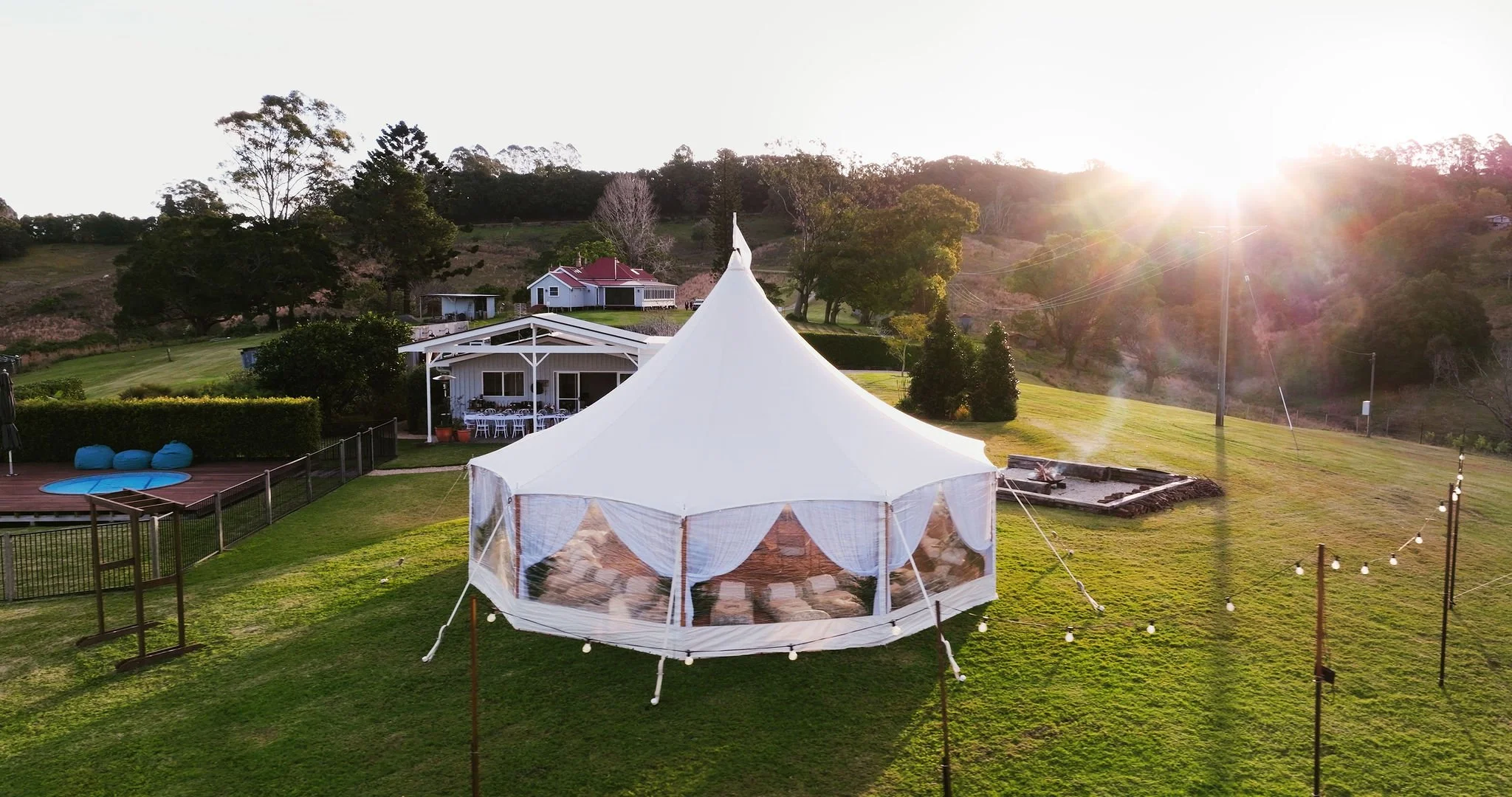
At Heartwood Farm in the Byron Bay Hinterland, this relationship between wellbeing and the natural environment is deliberately part of the experience. The property provides open skies, rolling countryside and quiet spaces where guests can slow down and reconnect.
But the deeper invitation is not to believe you can only feel that way at Heartwood Farm.
It is to rediscover where those moments exist in your own life.
5. Practise Conscious Breathing
We breathe thousands of times each day without thinking about it.
That makes the breath one of the most accessible anchors we have.
Try this simple ritual.
Before an important conversation, pause.
Before opening the laptop, pause.
Before walking through your front door after work, pause.
Take three slow, conscious breaths.
Notice the sensation of breathing.
Notice where your body is holding tension.
Then continue.
The ritual doesn't need to become complicated.
Its value is in creating a deliberate interruption between one experience and the next.
6. Create Small Moments of Gratitude
Gratitude can sometimes become another wellness task:
"Write five things you're grateful for."
Done.
But gratitude becomes much richer when it is something we actually feel.
Notice one thing.
Really notice it.
Warm sunlight.
Someone's kindness.
A meal.
Your dog greeting you.
The smell of rain.
A conversation.
A tree you pass every morning.
Instead of searching for something extraordinary, become more available to the ordinary.
That is where much of life is happening anyway.
7. Build Pauses Into Your Day
We often move directly from one thing into another.
Meeting.
Email.
Phone call.
School pickup.
Dinner.
Television.
Bed.
One simple daily ritual is to create intentional transitions.
Before moving into the next part of your day, give yourself sixty seconds.
Close your eyes.
Stretch.
Step outside.
Breathe.
Ask:
"What am I carrying from the last thing that I don't need to take into the next?"
A minute isn't much.
But psychologically, it can create a boundary.
8. Create an Evening Ritual for Letting Go
The body may be lying in bed while the mind is still sitting at the office.
An evening ritual can create a gentle signal that the active part of the day is finishing.
Dim the lights.
Put the phone away.
Have a shower.
Make herbal tea.
Write down tomorrow's priorities.
Journal.
Stretch.
Read.
Sit quietly.
The exact ritual matters less than the message:
Today is complete.
There is nothing else you need to solve right now.
Tomorrow will arrive when it arrives.




Wellness has become an enormous industry, and it is easy to believe there is a correct way to do it.
There isn't.
One person's meditation is another person's garden.
One person's journal is another person's walk.
One person finds peace through yoga.
Another through horses.
Another through music.
Another through sitting beside the ocean.
Another through five minutes alone with a cup of tea.
The question isn't:
"What should my wellness routine look like?"
A better question is:
"What genuinely brings me back to myself?"
That answer is far more useful.
Choose Rituals That Feel Like You
How Do I Make a New Ritual Stick?
If you want a ritual to become part of your life, make it easy to begin.Choose one practice rather than seven.
Make it small. Attach it to something you already do.
For example:
After I make my morning coffee, I will sit outside for five minutes.
When I finish work, I will take three conscious breaths before leaving.
After brushing my teeth at night, I will write one sentence in my journal.
These are essentially simple "if-then" plans: linking a recognisable cue with a chosen action. Research into implementation intentions suggests this kind of planning can help bridge the gap between wanting to do something and actually doing it.
And perhaps most importantly:
Make the ritual easy enough to return to.
The ritual should support your life.
Your life shouldn't become organised around maintaining the ritual.
A retreat can create something incredibly valuable: separation from our normal patterns.
The environment changes. The pace changes. The noise reduces.
We have permission to listen inwardly.
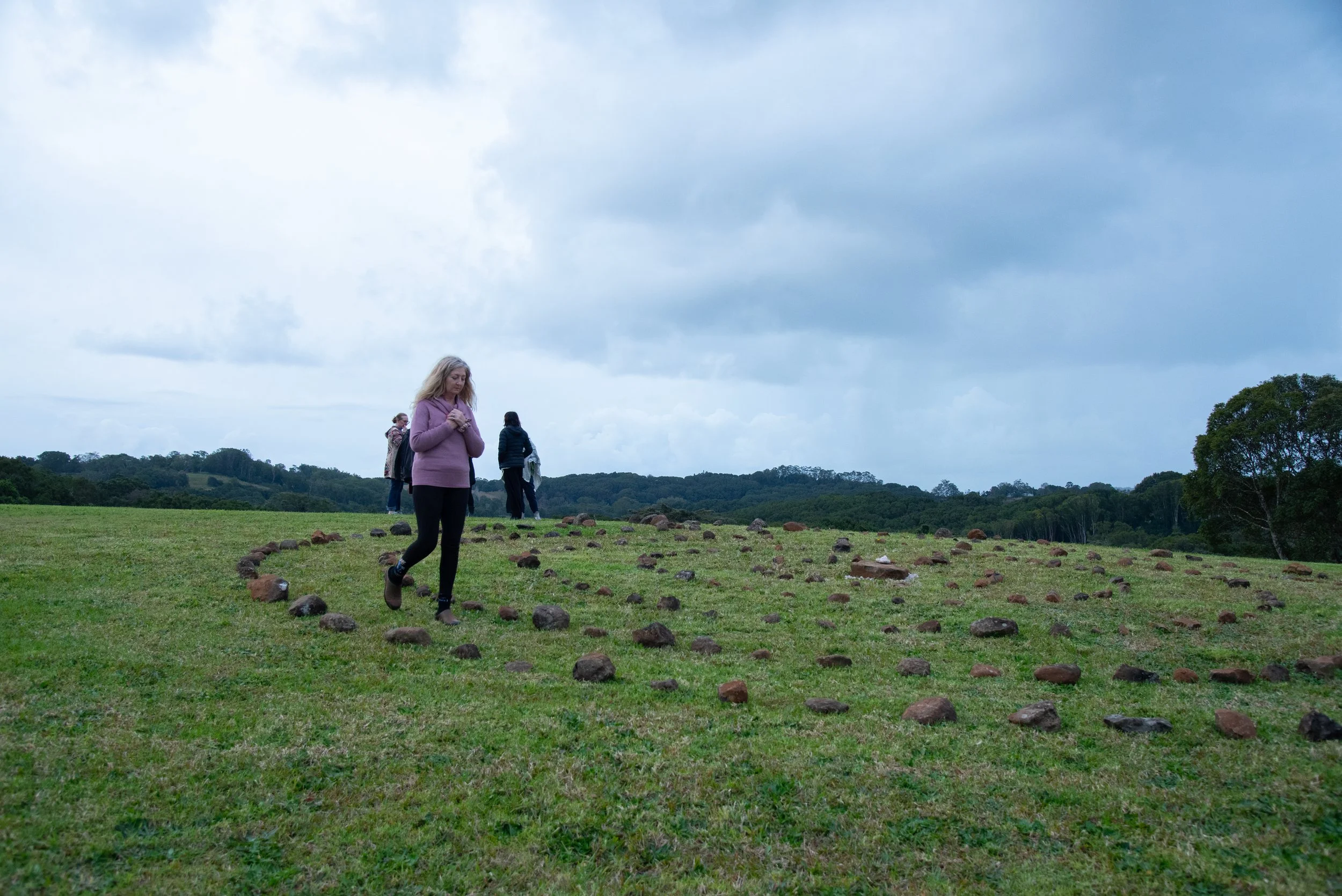
Lionsgate experiences at Heartwood Farm have been created around this opportunity to pause, reconnect and experience practices including meditation, breathwork, yoga and sound healing in a supportive natural environment.
But perhaps one of the most meaningful parts of any wellness experience is what happens afterwards.
You return home.
The inbox is waiting.
The washing still needs doing.
Life continues.
The goal isn't necessarily to recreate a retreat every morning. It is to bring something home with you. Maybe it is five minutes of stillness.
A morning walk.
A conscious breath.
An evening journal.
Time outside.
A clearer boundary.
A deeper awareness of what you need.
Small rituals create bridges between the person we discover when we have space and the person we are in ordinary everyday life.
And perhaps that is where lasting transformation really begins.
Not in one enormous decision.
But in small choices, consciously made, again and again.
You don't have to change everything today.
Choose one small ritual. Begin there.
Bringing the Retreat Experience Into Everyday Life


Key Takeaways
Big life changes often begin with very small actions.
Sustainable change doesn't require transforming everything at once.
A ritual is more than a habit.
Intention and awareness can turn ordinary actions into meaningful moments.
Consistency matters more than perfection.
Missing a ritual doesn't mean you've failed; simply return to it.
Begin your morning with yourself.
Even a few quiet minutes before checking your phone can create a more intentional start.
Stillness creates space for awareness.
You don't have to stop thinking; simply practise noticing.
Movement can be simple.
Walking, stretching, gardening and dancing all count as ways of reconnecting with the body.
Create transitions between parts of your day.
A few conscious breaths can help prevent one experience spilling automatically into the next.
Choose rituals that genuinely suit you.
There is no universal wellness routine.
Connect rituals to existing behaviours.
Linking a small practice with something you already do can make it easier to repeat.
Bring wellness home.
The greatest value of a retreat or workshop may be the practices and awareness you carry back into everyday life.
Daily Rituals Frequently Asked Questions
-
A daily wellness ritual doesn't have to be complicated or time-consuming.
It might be five minutes of quiet breathing after waking, drinking your morning tea outside, taking a walk after lunch, journalling before bed or consciously putting your phone away during dinner.
What distinguishes a ritual from an ordinary routine is often the intention behind it.
Brushing your teeth is generally a habit. Sitting outside with your morning tea and consciously taking several minutes to notice your surroundings can become a ritual.
The goal isn't to fill your day with wellness activities.
It is to identify small moments where you can intentionally reconnect with yourself.
For some people, that might involve meditation, yoga or breathwork. For others, gardening, walking, music, cooking or spending time with animals can create that same sense of presence.
A sustainable daily ritual should feel supportive rather than burdensome.
If maintaining your wellness routine becomes another source of pressure, simplifying it may be more helpful than adding something else.
-
We often underestimate small actions because their immediate effect appears insignificant.
One walk doesn't transform your health.
One meditation doesn't eliminate stress.
One evening without your phone doesn't completely change your sleep.
But that isn't really how sustainable behavioural change works.
Repeated choices accumulate.
Research into implementation intentions demonstrates one useful aspect of this process. Creating specific plans that connect situations with behaviours, essentially deciding when, where and how something will happen, has been shown to improve the likelihood of achieving goals. ScienceDirect
Instead of setting the broad goal "I want to be more mindful," for example, someone might decide:
"After I make my morning tea, I will sit outside quietly for five minutes."
The action is small, the cue is clear and the behaviour can be repeated.
Over time, these seemingly minor choices can become part of the way we live.
-
Start with one. A single small ritual practised consistently is often more sustainable than attempting to introduce an entirely new wellness routine at once. The objective isn't to accumulate wellness practices. It is to create a rhythm of living that genuinely supports you.
-
There is no perfect morning routine.
You don't need to wake at 5 am, meditate for an hour and watch the sunrise from a mountaintop.
A good morning ritual is one you can realistically maintain.
One particularly simple approach is to delay external stimulation for a few minutes after waking.
Instead of immediately checking emails, news or social media, open the curtains, drink some water, step outside or sit quietly.
Take several conscious breaths and ask:
"How do I want to move through today?"
That question subtly shifts attention away from everything demanding your attention and back towards intention.
Even three to five minutes can create a meaningful transition between sleep and the day ahead.
The best morning ritual is ultimately the one that leaves you feeling more present rather than more pressured.
-
When stress builds, we often assume we need a significant intervention.
Sometimes what we need first is a pause.
Try taking three slow breaths before answering the phone.
Walk outside between meetings.
Stretch for two minutes.
Eat lunch away from your desk.
Take a short walk without your phone.
Sit quietly before driving home.
Research suggests mindfulness meditation programs can provide modest benefits for several dimensions of psychological stress, although outcomes and evidence strength vary.
The key is to identify small opportunities throughout the day where your attention can return to the present.
If you are experiencing persistent or severe stress, anxiety or other mental-health concerns, daily wellness rituals should complement rather than replace appropriate professional support.
-
One of the biggest barriers to wellness is the belief that we don't have enough time.
But a ritual doesn't have to occupy a large part of your day.
Three conscious breaths may take less than a minute.
Writing one sentence in a journal may take two.
Sitting outside with your coffee may take five.
A short walk might take ten.
Rather than deciding that a practice isn't worthwhile because you can't dedicate thirty minutes to it, work with the time you actually have.
This also removes the all-or-nothing thinking that can undermine new routines.
If your normal walk is twenty minutes but today you only have five, walk for five.
If you normally meditate for ten minutes but only have two, take the two.
Something doesn't become meaningless simply because it is small.
-
Instead of relying entirely on motivation, create an obvious cue.
For example:
"After I brush my teeth, I will take three conscious breaths."
"After making coffee, I will sit outside for five minutes."
"When I close my laptop at the end of the day, I will stretch for two minutes."
"When I get into bed, I will write one sentence in my journal."
This resembles what behavioural researchers call an implementation intention, a specific plan connecting a situation or cue with an intended action. A meta-analysis of 94 independent tests found implementation intentions had a meaningful positive effect on goal attainment.
It also helps to make the ritual convenient.
Leave the journal beside the bed.
Put your walking shoes near the door.
Create the physical environment that makes your desired behaviour easier.
Most importantly, don't require perfection.
A sustainable ritual is one you can return to.
-
Retreats can feel powerful partly because they temporarily change the conditions around us.
There may be fewer distractions, more time in nature, guided practices, nourishing food, supportive facilitators and permission to slow down.
Returning home means returning to normal responsibilities.
Instead of asking how to reproduce the entire retreat, ask:
"What part of that experience do I want to keep?"
Perhaps you loved morning meditation.
Create a five-minute version.
Perhaps being outdoors made you feel grounded.
Drink your morning tea outside.
Perhaps journalling created clarity.
Keep a journal beside your bed.
Perhaps sound healing reminded you how deeply your body needed rest.
Create more intentional periods of quiet.
Lionsgate experiences at Heartwood Farm are intentionally centred around opportunities to slow down, reconnect and experience restorative practices in a peaceful natural environment.
The deeper opportunity is to allow those experiences to influence how you live when you return home.
Whether you're organising a wellness retreat, leadership program, corporate offsite or private group experience,
choosing the right venue is one of the most important decisions you'll make.
At Lionsgate Wellness, we partner with facilitators, organisations and retreat hosts to create meaningful experiences that inspire connection, reflection and transformation. Set within the peaceful surrounds of Heartwood Farm in the Byron Bay Hinterland, our venue provides a flexible and
nature-rich environment where your vision can come to life.
If you're exploring venues or would simply like to discuss your ideas, we'd love to help you find the right setting for your next retreat.
Discover Heartwood Farm, explore our retreat experiences or contact the Lionsgate Wellness team to start planning your next unforgettable gathering.
→ Explore Retreat Experiences
→ View Heartwood Farm
→ Enquire About Venue Hire
Planning A Retreat That Creates Lasting Impact?
Discover why Heartwood Farm and the Byron Bay Hinterland have become one of Australia's most sought-after destinations for wellness retreats, leadership retreats
and meaningful group experiences.
