

Equine Assisted Healing Frequently Asked Questions
This philosophy comes to life through Horse Wisdom, Presence. Connection. Inner Knowing, held at Heartwood Farm.
Horse Wisdom is a ground-based experience, meaning there is no riding involved and no previous experience with horses is required.
Instead, participants are invited into guided interactions with horses alongside practices including mindfulness, breath awareness,
grounding, reflection and immersion in nature.
The emphasis is not on learning how to control or ride a horse.
It is on relationship.
On slowing down enough to notice.
-
Equine assisted healing brings people and horses together within a guided or intentional experience.
Rather than focusing primarily on riding or learning horsemanship skills, many equine-assisted experiences use interaction with horses as an opportunity to explore awareness, communication, relationships and presence.
Activities can vary considerably. They might involve observing horses, approaching them, leading, grooming, completing ground-based activities or simply spending quiet time nearby.
The experience can encourage us to notice things we might otherwise overlook.
How are we breathing?
How are we holding our body?
How do we approach another living being?
How do we respond when connection doesn't happen exactly as expected?
The term equine assisted healing should not automatically be interpreted as clinical therapy. Some equine-assisted approaches operate within formal therapeutic frameworks, while others focus on experiential learning, personal development or general wellbeing.
At Lionsgate Wellness, the emphasis is on creating opportunities for presence, connection and reflection through thoughtfully facilitated experiences with horses.
-
People frequently search for horse therapy when they are actually interested in several different things.
They might mean:
equine-assisted psychotherapy;
therapeutic riding;
equine-assisted learning;
occupational or physical therapy involving horses;
or a general wellbeing experience involving connection with horses.
These approaches are not interchangeable.
For example, therapeutic riding may involve mounted activities, while many equine-assisted psychotherapy and wellbeing experiences are entirely ground-based.
For this reason, it is more useful to understand the purpose and structure of a particular program than rely on the phrase “horse therapy” alone.
At Lionsgate Wellness, Horse Wisdom is described as a ground-based equine-assisted experience centred around presence, connection, mindfulness, reflection and nature rather than riding instruction.
-
One of the most common misconceptions about equine-assisted work is that participants need to ride.
Many approaches require no riding at all.
Ground-based activities might include observing horses, approaching them, leading them, moving through activities together or simply sharing space.
Removing riding from the experience changes the emphasis.
The objective is no longer learning to control the horse from the saddle or developing riding technique.
Instead, attention can move toward:
communication, presence, body language, relationship and awareness.
Some therapeutic programs do involve mounted activities, particularly therapeutic riding and certain physical or occupational therapy approaches.
This is why it is important to check the structure of the specific program you are considering.
Horse Wisdom at Heartwood Farm is ground-based, so previous riding experience is not required.
-
Horses interact with their environment continuously.
Within their social groups they communicate through movement, posture, positioning, facial expression and behaviour rather than human language.
When we interact with a horse, we therefore need to pay attention differently.
Words become less important.
Our movement matters.
Our position matters.
Timing matters.
The horse's response matters.
This creates an experience that is immediate rather than purely intellectual.
Someone might understand the concept of personal space perfectly well during a conversation, for example, but experience boundaries very differently when standing beside a large animal with its own preferences about proximity.
Horses don't need to be viewed as mystical or capable of diagnosing human emotions for these interactions to be meaningful.
Their value lies partly in the fact that they are another living being with whom genuine communication and relationship must develop in the moment.
-
You will sometimes hear that horses can instantly “read” everything a person is feeling.
The reality is more nuanced.
Horses are highly attentive animals and can respond to a range of human cues. Our posture, movement, voice, proximity and behaviour can all affect an interaction.
This can make it feel as though the horse knows exactly what we are thinking.
But it is more responsible to focus on what can actually be observed.
The horse responds.
We notice the response.
We become curious about the interaction.
Perhaps we realise we were moving more quickly than we thought.
Perhaps our body was tense.
Perhaps we approached with hesitation.
The value lies not in claiming the horse has diagnosed our emotional state, but in using the interaction as an opportunity for greater awareness.
-
There is no guarantee that everyone will immediately feel relaxed around horses.
For someone unfamiliar with them, being close to a large animal may initially feel exciting or uncertain.
That is completely understandable.
As comfort develops, however, the experience may encourage a different pace.
You may move more deliberately.
Watch more carefully.
Become aware of your breathing.
Listen.
Notice the environment.
These are all qualities associated with mindful attention.
When equine experiences also take place within a peaceful natural environment, participants may simultaneously experience reduced digital distraction, open space and connection with nature.
Rather than saying that horses automatically “calm the nervous system,” it is more accurate to recognise that the conditions surrounding the interaction may support experiences of grounding, presence and calm for some people.
-
Our minds spend enormous amounts of time somewhere other than the present.
We replay conversations.
Plan tomorrow.
Check notifications.
Imagine what might happen next.
Standing beside a horse changes the focus.
There is another living being in front of you.
You notice movement.
Distance.
Sound.
Your breathing.
Your body.
The horse's behaviour.
The interaction asks for attention.
This does not mean thoughts disappear. Instead, there is something tangible to return attention to.
That makes equine-assisted experiences particularly compatible with mindfulness practices.
Presence stops being an abstract idea and becomes something experienced through relationship.
-
Emotions are not experienced only as thoughts.
They can also appear through bodily sensations.
A tightening in the chest.
A change in breathing.
Butterflies.
Warmth.
Tension.
An urge to move closer or create distance.
Because interaction with a horse occurs in real time, participants can sometimes become more aware of these responses as they happen.
Rather than immediately asking, “What does this mean?”, it can be useful to begin with:
“What am I noticing?”
That simple question creates room for curiosity.
In therapeutic settings, emotional material should be supported by appropriately qualified professionals.
Within general wellbeing experiences, the emphasis can remain on mindful awareness and reflection rather than diagnosis or treatment.
-
Equine-assisted interventions have been studied across areas including mental health, developmental needs, rehabilitation and wellbeing.
However, “equine-assisted therapy” does not describe one universally standardised intervention.
Different studies may examine different populations, practitioner models, activities, session lengths and outcomes.
This makes broad claims difficult.
Some research reports promising outcomes, but reviews have also highlighted limitations including small samples, differences between interventions and variable methodological quality.
The responsible position is therefore neither to dismiss equine-assisted work nor claim that horses can universally treat particular conditions.
Instead, consider:
the specific intervention;
the evidence relating to that intervention;
the qualifications of the practitioners;
and whether it is appropriate for the individual's needs.
For clinical concerns, equine-assisted work should complement — not casually replace — appropriate healthcare or mental-health support.
-
You do not need to consider yourself a “horse person” to explore an equine-assisted experience.
In fact, approaching horses without extensive previous experience can sometimes encourage curiosity because there are fewer assumptions about what you are supposed to do.
A facilitator should explain how to approach and interact with horses safely.
The focus is not on demonstrating equestrian skill.
You may be invited to observe.
Slow down.
Notice.
Interact.
And become curious about what unfolds.
Always check the requirements of the individual program, particularly if mounted activities are involved.
For Horse Wisdom at Heartwood Farm, no previous riding experience is required because the experience is ground-based.
-
Being nervous around horses is understandable, particularly if you have little previous experience. A well-facilitated program should allow you to proceed gradually and never pressure you into interaction beyond your comfort or safety.
Horses are large animals.Feeling some uncertainty around them is completely reasonable.
You don't need to pretend otherwise.
In fact, noticing that response can become part of your present-moment awareness.
A responsible facilitator should introduce the environment and horses carefully, explain safety expectations and allow interaction to develop progressively.
You may initially prefer to observe from a comfortable distance.
Over time, you may choose to move closer.
Or you may not.
The aim should not be forcing yourself through fear to achieve a particular outcome.
Safety, consent and respect — for both participant and horse — should remain central throughout the experience.
-
Horse Wisdom invites participants to step away from the usual pace of everyday life and enter a different kind of relationship.
Rather than riding or learning traditional horsemanship, the emphasis is on presence and interaction.
Participants are guided through experiences involving horses alongside practices such as mindfulness, breath awareness, grounding and reflection.
The horses are not there to perform or provide predetermined answers.
Instead, the interaction creates opportunities to notice.
How are you approaching?
What are you feeling?
What is happening in your body?
How is the horse responding?
What changes when you slow down?
Held within the natural surroundings of Heartwood Farm, Horse Wisdom brings together three important Lionsgate Wellness themes:
connection with self, connection with another living being and connection with nature.
-
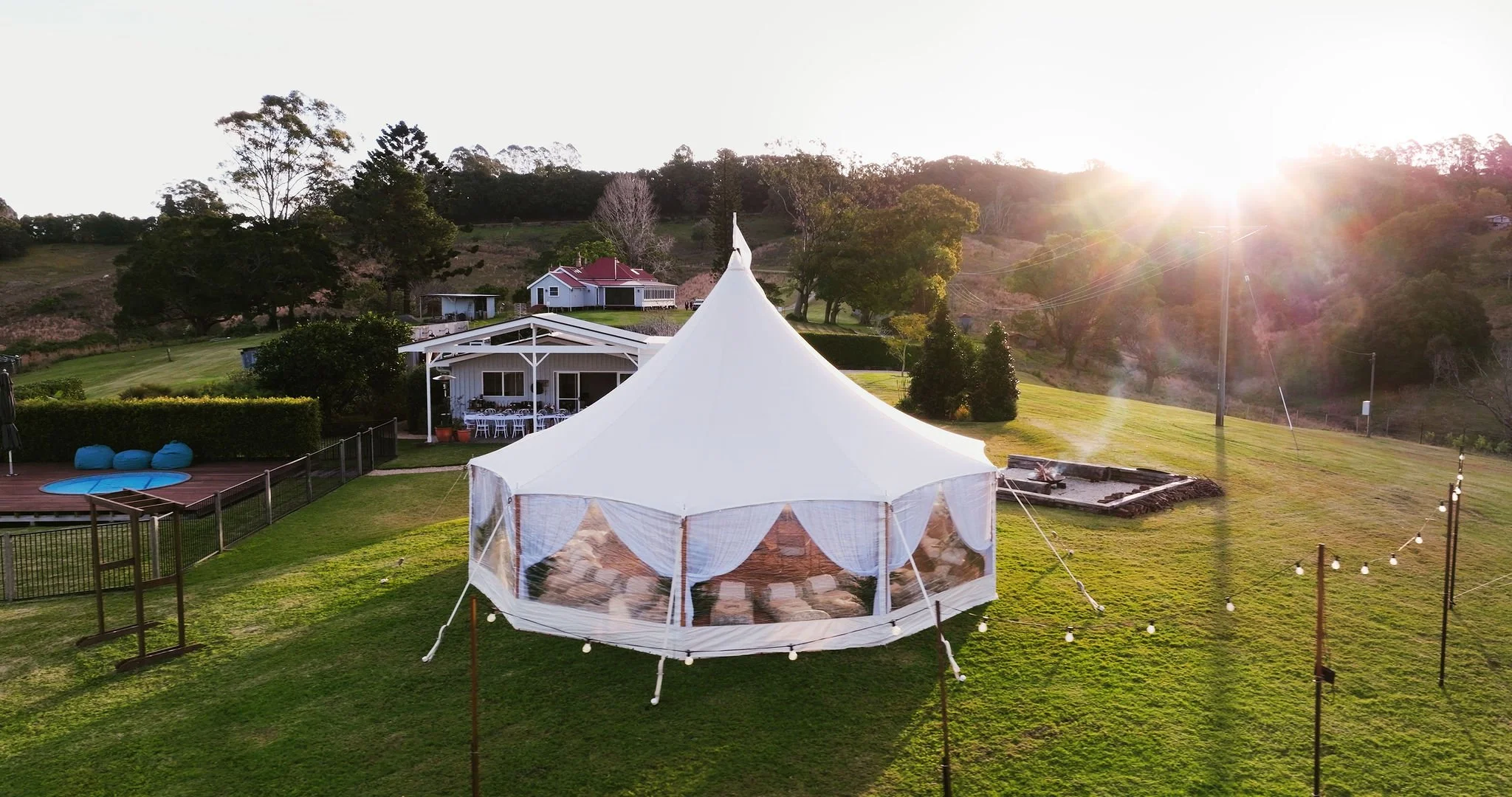
Heartwood Farm combines horses with a private natural environment in the Byron Bay Hinterland, allowing equine-assisted experiences to unfold within a wider setting of space, nature and reflection.
The journey into the environment becomes part of slowing down.This creates a natural relationship with the principles explored in our Nature Based Healing Knowledge Centre.
The horse may become the focus of a particular interaction, but the wider landscape continues to hold the experience.
Before, during and afterwards, there is space to breathe, observe and reflect.
This is one reason Heartwood Farm feels particularly aligned with the philosophy behind Horse Wisdom.